The sudden shutdown of Anthropic’s Claude Fable 5 and Mythos 5 on June 12, 2026, is an absolute defining moment for the global tech landscape.
For the first time, the U.S. government didn’t just restrict physical hardware like semiconductor chips, it used national security export controls to instantly pull the plug on a live, running cloud software service mid-use.
If you are leading data, platform, or AI strategy, understanding this event is critical. It fundamentally rewrites the rules of AI regulation, geopolitical risk, and enterprise architecture.
This Isn’t Just a Shutdown — It’s a Signal
We’ve officially crossed a threshold. For years, enterprises have operated under an implicit, comfortable assumption. Software is global. Cloud is borderless. APIs are always available. That assumption is now broken. When a frontier model can be turned off globally, mid-execution, mid-pipeline, mid-product, you are no longer consuming traditional “software.” You are consuming a highly regulated, federally controlled capability.
The AI Supply Chain Is Now a Board-Level Risk
This moment exposes a massive structural vulnerability that most enterprises have completely internalized. The AI supply chain is incredibly fragile, and largely invisible.
Think about the systems quietly transforming your operations:
- Your developer copilots
- Your automated data pipelines
- Your engineering accelerators
- Your customer-facing decisioning models
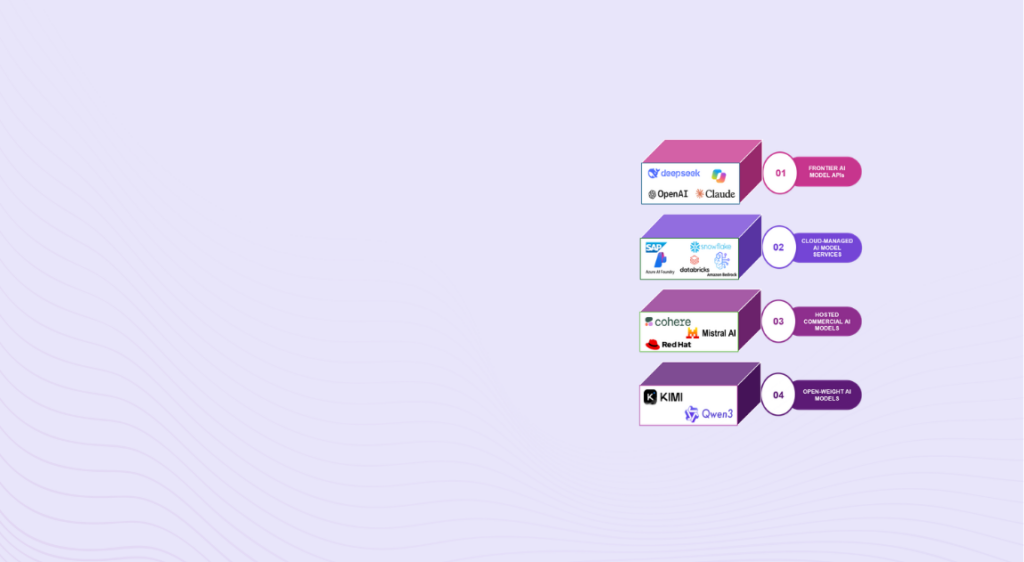
Nearly all of these are increasingly powered by external APIs hosted offshore. And as of this week, we know the reality: they can be revoked or changed instantly, restricted by user nationality rather than contract terms, and subjected to sudden geopolitical controls far beyond your influence.
This is no longer a theoretical exercise for a risk committee. It is an immediate operational hazard.
The Workforce Trap: AI Stability is Now Job Security
The conversation around AI and the workforce usually revolves around automation replacing roles. This shutdown exposes a much more immediate, volatile threat: uncontrolled AI dependencies paralyzing human jobs.
When an enterprise bakes a frontier model into the daily workflows of its staff, that workforce becomes profoundly dependent on its availability.
- If your engineering team relies on a custom copilot pipeline to deliver code, and that model fades away overnight, developer velocity drops to a standstill.
- If your operational teams rely on automated decisioning models to process claims, logistics, or data ingestion, their ability to execute is at risk instantly.
When the model gets pulled, the workflow breaks. If a business loses its core intelligence capability overnight, it cannot deliver on its contracts, directly threatening business viability and the jobs of the people who power it.
Securing and controlling your AI infrastructure is no longer just a technical compliance requirement. It is a fundamental duty of care to safeguard your workforce’s productivity and employment stability.
The Sovereign AI Mandate
This event will massively accelerate a trend that has been quietly building behind the scenes: Sovereign AI is important for control and security.
Organizations can no longer afford to outsource their core intelligence layer blindly. We now have to ask hard, foundational questions about our architectures:
- Where exactly are our models hosted?
- Who controls access at a regulatory and sovereign level?
- Can we run critical workloads completely independently if external access is revoked?
If you don’t control the underlying infrastructure, the runtime, or the model weights, you do not control your business capability.
Release Management Is the New Risk Surface
There is a more subtle implication here, one that will catch many fast-moving organizations completely off guard: Chasing the latest model is now a distinct risk, not just a competitive advantage.
Frontier models move faster than current governance frameworks, draw the highest regulatory scrutiny, and are the most likely to trigger sudden government intervention. If a targeted exploit or jailbreak can trigger an overnight service recall, your production workloads can break without warning.
This reality instantly elevates the importance of rigorous platform engineering:
- Multi-model orchestration: Avoiding single-provider lock-in.
- Fallback abstractions: Designing systems that gracefully downgrade to alternative models if the primary goes dark.
- Version pinning and isolation layers: Protecting core environments from external instability.
In short, release management for AI is now just as critical as your cybersecurity architecture.
The Situation for Enterprise Leaders
Moving forward, we have to change how we build. Here is how strategic leaders must adapt immediately:
- Treat AI like critical infrastructure: Stop treating frontier models like standard SaaS integrations or simple productivity tools. Treat them as core dependencies with geopolitical exposure and massive workforce impact.
- Map your AI supply chain: Thoroughly audit your providers, model dependencies, hosting jurisdictions, and access constraints. Know exactly where your data travels and where the compute happens.
- Design for failure, not availability: Assume models can disappear, APIs can be restricted, and access can be revoked. Architect your data systems to adapt dynamically so your staff are never left stranded.
- Rethink “latest is best”: In this new regulatory paradigm, stability beats novelty. Governed rollout beats rapid, blind adoption. Control beats raw capability.
Final Thought
This isn’t just about Anthropic, and it’s not even entirely about the U.S. government. This is a fundamental shift in how AI will operate globally from this point forward.
The era of unrestricted, borderless AI access has to be thought through carefully. Remember when you automate a job, it’s moving somewhere else and provides massive economic benefits to that country, like power, workforce, and development of AI. The organisations that win from here won’t be the ones scrambling to adopt the most advanced model the week it drops. They will be the ones who understand their dependencies, strictly control their execution environments, and design robust architectures for a world where access and the human productivity tied to it are no longer guaranteed.