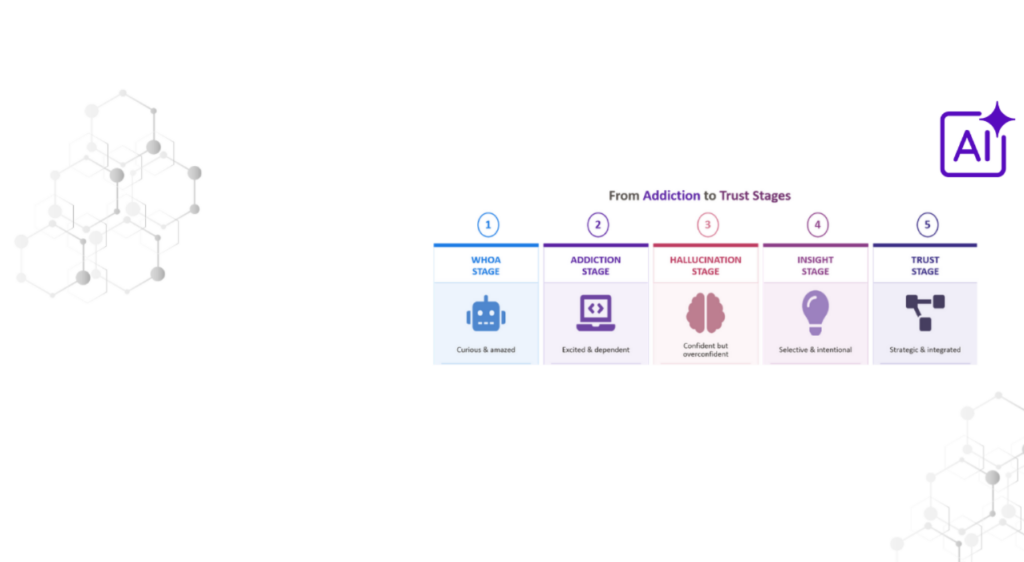
AI is changing far more than the technology layer. It is reshaping how organisations make decisions, serve customers, design processes, manage risk and create value. This is why systems thinking is becoming essential. Without it, organisations risk using AI to make individual activities faster while unintentionally weakening the wider system that creates long-term value.
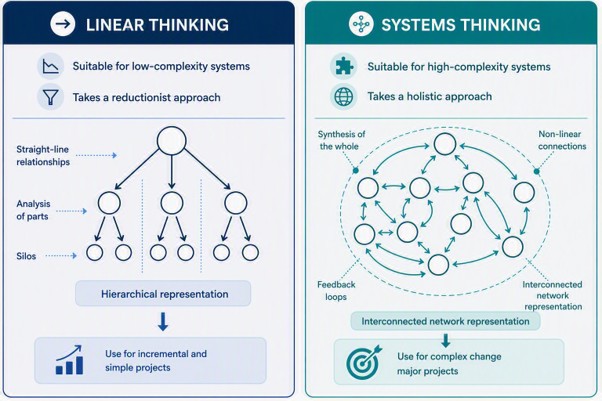
This picture shows the difference clearly. Linear thinking works well when problems are simple, predictable and can be broken into separate parts. It follows straight-line relationships, hierarchies and silos. Systems thinking is different. It is designed for complexity. It looks at the organisation as an interconnected network, where feedback loops, dependencies, behaviours and unintended consequences shape the outcome. In the age of AI, this matters because technology that once required large teams and months of effort can now be prototyped in days. Workflows can be automated quickly, content can be generated instantly and ideas can move from concept to execution faster than ever before. But when speed increases, system effects also increase.
Understanding the Organisation as a System
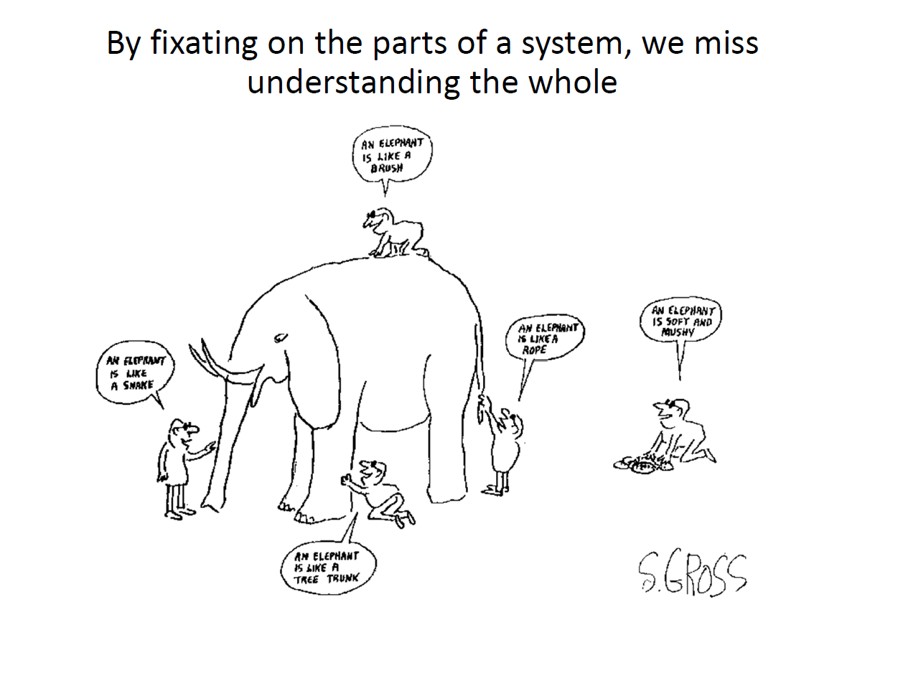
Systems thinking comes from the idea that complex problems cannot be solved by looking at individual parts in isolation. It originated from systems theory and was later applied to organisations to help leaders understand how people, processes, technology, governance, customers and incentives interact. At its core, systems thinking is about seeing the whole system, understanding the relationships within it and identifying the leverage points that can create meaningful change. This simple diagram explains it if you look at items individually.
This matters because AI does not sit neatly inside the technology layer. It changes behaviours, expectations, decision flows, operating models, risk profiles and customer experiences. Without a systems view, organisations can make individual teams faster while making the overall organisation more fragmented.
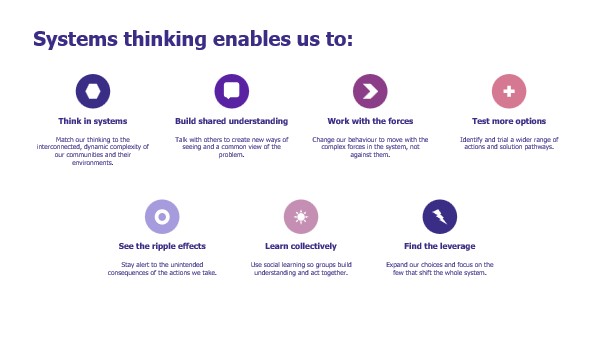
The diagram is useful because it shows the behaviours leaders need in the AI era: think in systems, build shared understanding, work with the forces already shaping the organisation, see ripple effects, test more options, learn collectively and find leverage. These are the disciplines required to move beyond isolated AI use cases and create value across the whole system.
AI Is Reshaping the System
The current AI wave is different because it is not only changing how organisations operate; it is changing how people behave. Customers expect faster, more personalised experiences. Employees are bringing AI-enabled habits from their personal lives into the workplace. These shifts create ripple effects across products, services, workflows, governance, risk and operating models.
This is why AI should not be viewed as a technology initiative. It is a systems initiative.
AI as a Systems Thinking Enabler
Most organisations are starting with AI as a productivity tool: writing, summarising, generating slides, automating routine tasks and helping individuals work faster. These use cases create value, but they only scratch the surface.
The bigger opportunity is to use AI to understand the system itself. AI can connect information across functions, surface patterns, identify dependencies and help leaders see how decisions in one area affect outcomes elsewhere. In this sense, AI can become a systems-thinking accelerator.
It can help organisations move beyond departmental optimisation and understand how customers, operations, governance, compliance, technology, people and revenue models interact as one system.
The Advantage and Risk of AI
The greatest advantage of AI is its ability to connect information. The greatest risk is that organisations mistake connected information for genuine understanding.
AI can identify patterns, summarise data and reveal relationships, but it does not fully understand organisational context, incentives, culture, politics or unintended consequences. Those remain leadership responsibilities.
Without systems thinking, AI can accelerate fragmentation as easily as it can accelerate value creation.
Understanding Where Value Really Exists
As the barriers to creating technology fall, leaders need to revisit a more fundamental question:
What is it that customers are actually buying from us?
Customers are rarely buying technology alone. They are buying expertise, trust, reliability, operational capability and confidence that outcomes can be delivered consistently. Technology enables these outcomes, but the real source of value often sits deeper within the system.
Tools
Systems thinking is about understanding how people, processes and different parts of an organisation interact to create outcomes. Here are some of the tools that can help us understand and think about systems differently:
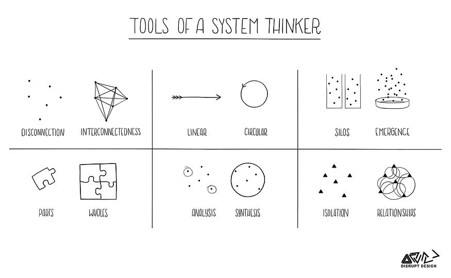
Technology and AI alone cannot change a system but can help us better understand these complex systems, identify patterns and opportunities and support change.
The New Competitive Advantage
The next decade will not be defined by who adopts AI first. It will be defined by who understands their system best and leverages frameworks like AI to make the change.
Many organisations will use the same models, tools and platforms. The difference will be, how well they integrate AI into their operating model and use it to improve the whole system, not just individual tasks.
The future value of AI may not come from automation alone. It may come from helping organisations see themselves more clearly, find the right leverage points and make better decisions across the system.